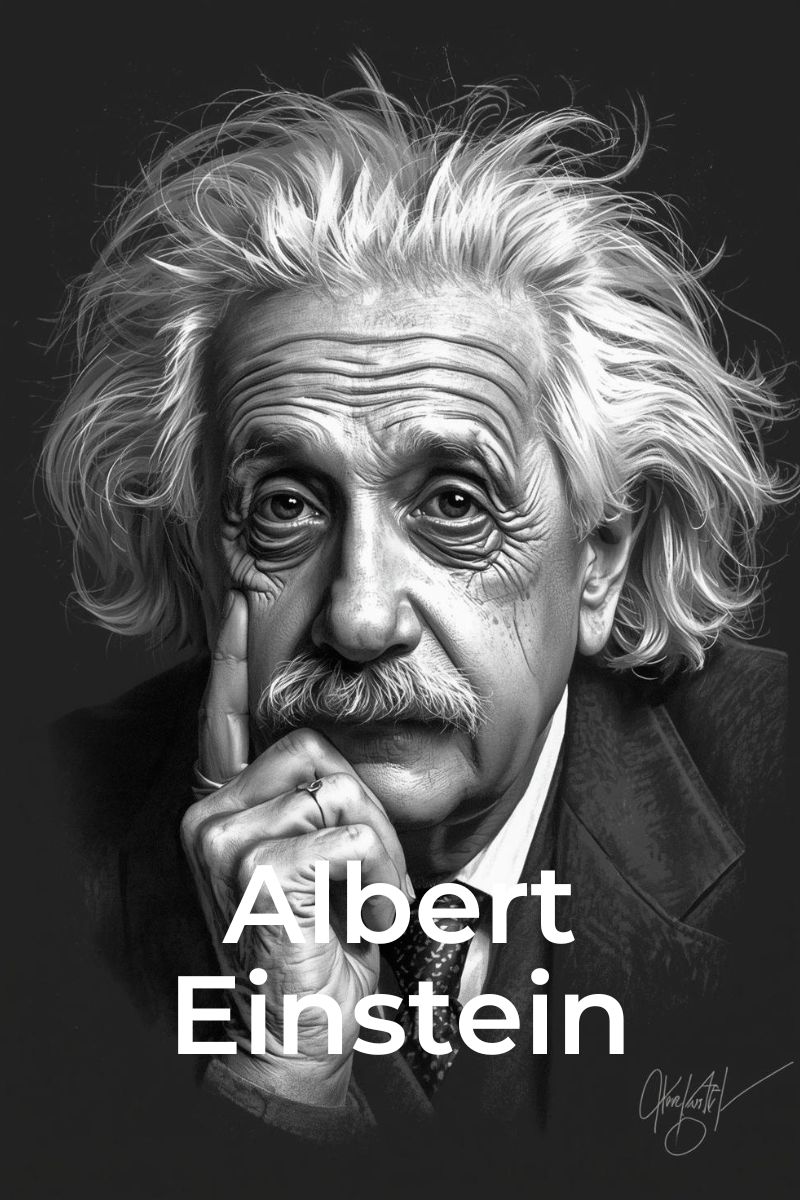
Albert Einstein Biography: Introduction
| Information At a Glance : |
| Full Name : Albert Einstein |
| Age : 76 years (at the time of death) |
| Birthplace : Ulm, Germany |
| Profession : Theoretical Physicist |
| Education : ETH Zurich (Swiss Federal Polytechnic), Aarau Cantonal School |
| Hobby : Music (Violin and Piano), Sailing, Reading and Thought Experiments, and Walking/Hiking |
Albert Einstein’s Early Life & Family Background
Albert Einstein (March 14, 1879 – April 18, 1955) was born in Ulm, Germany, to a middle class Jewish family. His father, Hermann Einstein, worked as an engineer, and his mother, Pauline Einstein, loved music and encouraged creativity.
Einstein was a quiet boy who observed everything around him closely. Because he didn’t talk much at first, some believed that he was slow to speak, but in actuality, he was very curious about how everything worked.
A very famous story from his childhood tells about his experience seeing a compass for the first time. He was fascinated with the way the needle moved due to the invisible force pulling on it, and it was this experience that would lead to the development of his critical thinking skills later in life.
The Background of Albert Einstein’s Family
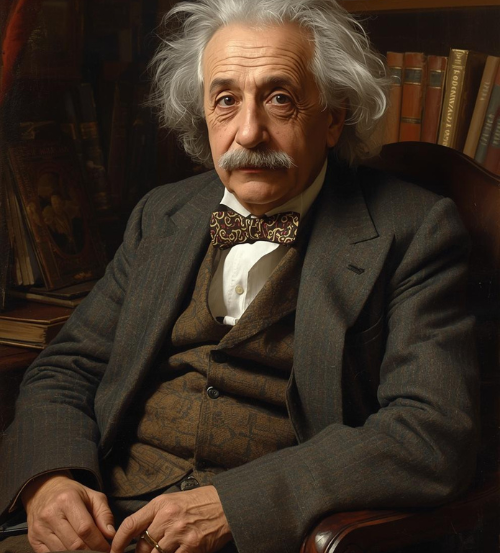
Albert Einstein’s parents were Hermann Einstein, a Salesman And Engineer, and Pauline Koch Einstein, both were secular Ashkenazi Jews. He had one younger sister, Maria (Nicknamed Maja), who was born in 1881. His father and uncle (Jakob) run Elektrotechnische Fabrik J. Einstein & Cie., which was a Manufacturing Company that made Electrical Equipment. After he was born in Ulm, he moved to Munich in 1880 and spent most of his early childhood there.
The Early Years Of Albert Einstein’s Life
Einstein’s parents were concerned that he was late in learning to talk as a child, but did not think he was “Retarded.” At twelve years old, Einstein was very impacted by a geometry book. He attended the St. Peter’s Roman Catholic Elementary School, then the Luitpold Gymnasium in Munich. He did not enjoy the strict memorization routines used in the Prussian School System. He developed a music interest with his mother’s help, and he learned how to play the piano and the violin. After the family business failed again, the family moved to Milan, Italy, leaving Einstein in Munich to complete his studies.
Key Early Events
At 16 years old, Albert Einstein quit Gymnasium education to give up his citizenship and not to participate in the military, and moved to Switzerland to continue his education. He went to Aarau High School and then registered at the Swiss Federal Polytechnical School in Zurich in 1896, where he studied mathematics and physics to become a math and physics high school teacher. At 16, he wrote his first scientific paper called On the Investigation of the State of Ether in a Magnetic Field.
Starting with Albert Einstein’s family and career
Albert Einstein met Mileva Marić at the Zurich Polytechnic. They got married in 1903 and had two children before separating. After completing his studies and not being able to find a teaching job after he graduated, he started working as a technical assistant for the Swiss Patent Office in Bern in 1901.
Marriage to Mileva Marić
Later marriage to Elsa Einstein
Albert Einstein Biography: Children
Hans Albert Einstein
Eduard Einstein
Albert Einstein’s Education
Einstein experienced some turbulence throughout his schooling as he did not really enjoy his teachers’ more serious style of instruction and would frequently contest/belittle them for their methods. He later went on to ETH Zurich in Switzerland to study both physics and mathematics. While his studies were a success (he graduated), finding a job to put his education into practice proved to be quite challenging for him. Ultimately, he found employment with a patent office in Bern, where he could take the time he needed to think and where he came up with many of his greatest ideas.
Albert Einstein Biography: Career Journey
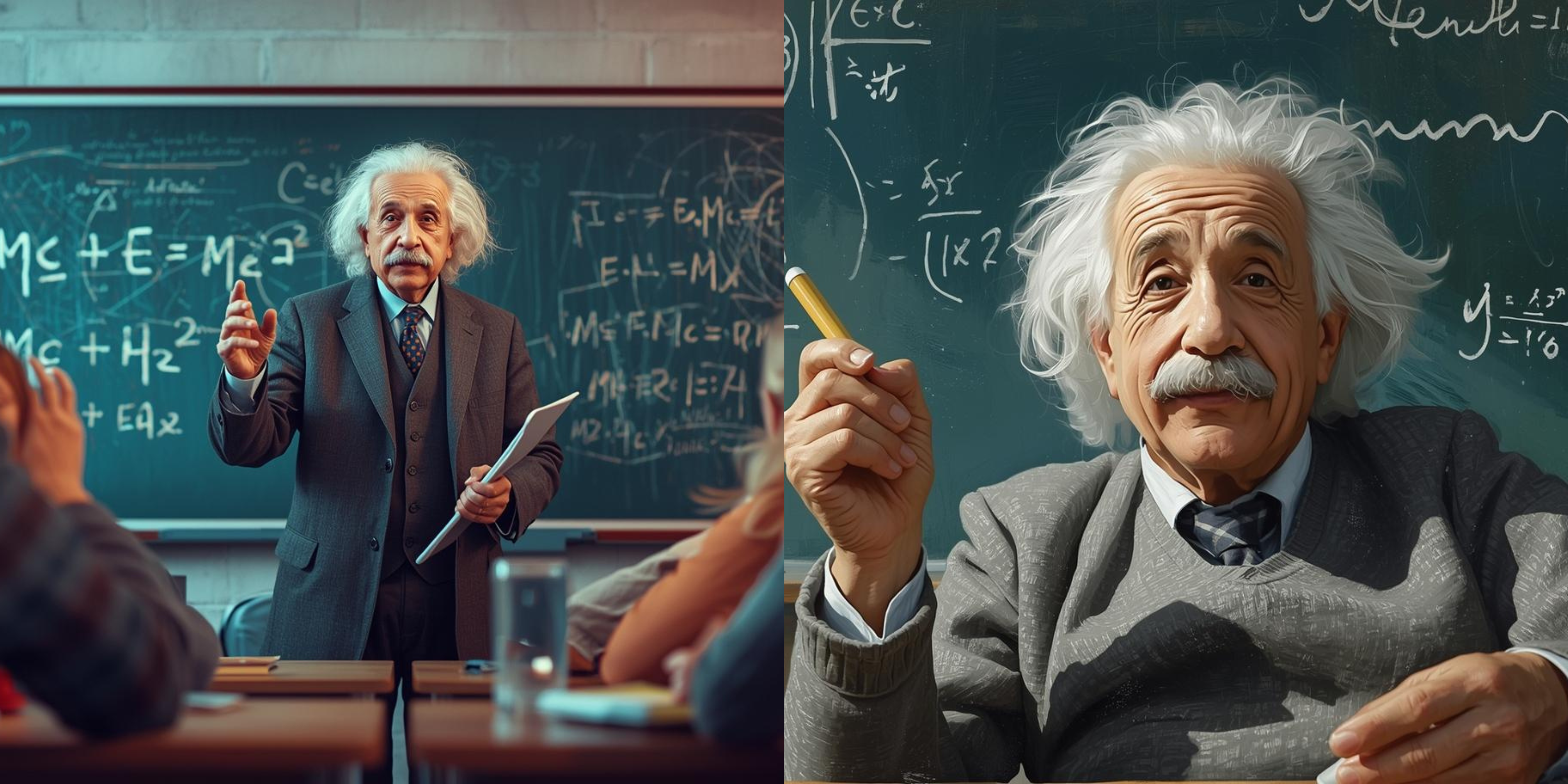
1905 was an important year for Albert Einstein’s life; this was the year that is referred to by his peers as his “Miracle Year”. During this one year, he published four papers that changed the entire field of physics as we know it today with significant contributions relating to light, energy, and motion. Below is a summary of the four papers he published in 1905.
In 1915, Einstein introduced Relativity – a new way to understand how gravity works. His findings were eventually verified by scientists through experimentation, leading to his becoming a scientific legend. After this great success, he began teaching at prestigious universities, such as Princeton, and became known as a worldwide figure in the field of science
Albert Einstein’s Biography: Awards & Recognition
1. Nobel Prize in Physics (1921)
2. Copley Medal
3. Time Person of the Century (1999)
Albert Einstein’s Major Achievements / Work
Albert’s achievements in the scientific world are remarkable:
1. He created the Relativity Theory
2. Provided the basis for the equation E=mc²
3. Explained the photoelectric effect/Nobel Prize winner
4. Developed the groundwork for Modern Physics
His research changed science and has had a lasting effect on current technologies.
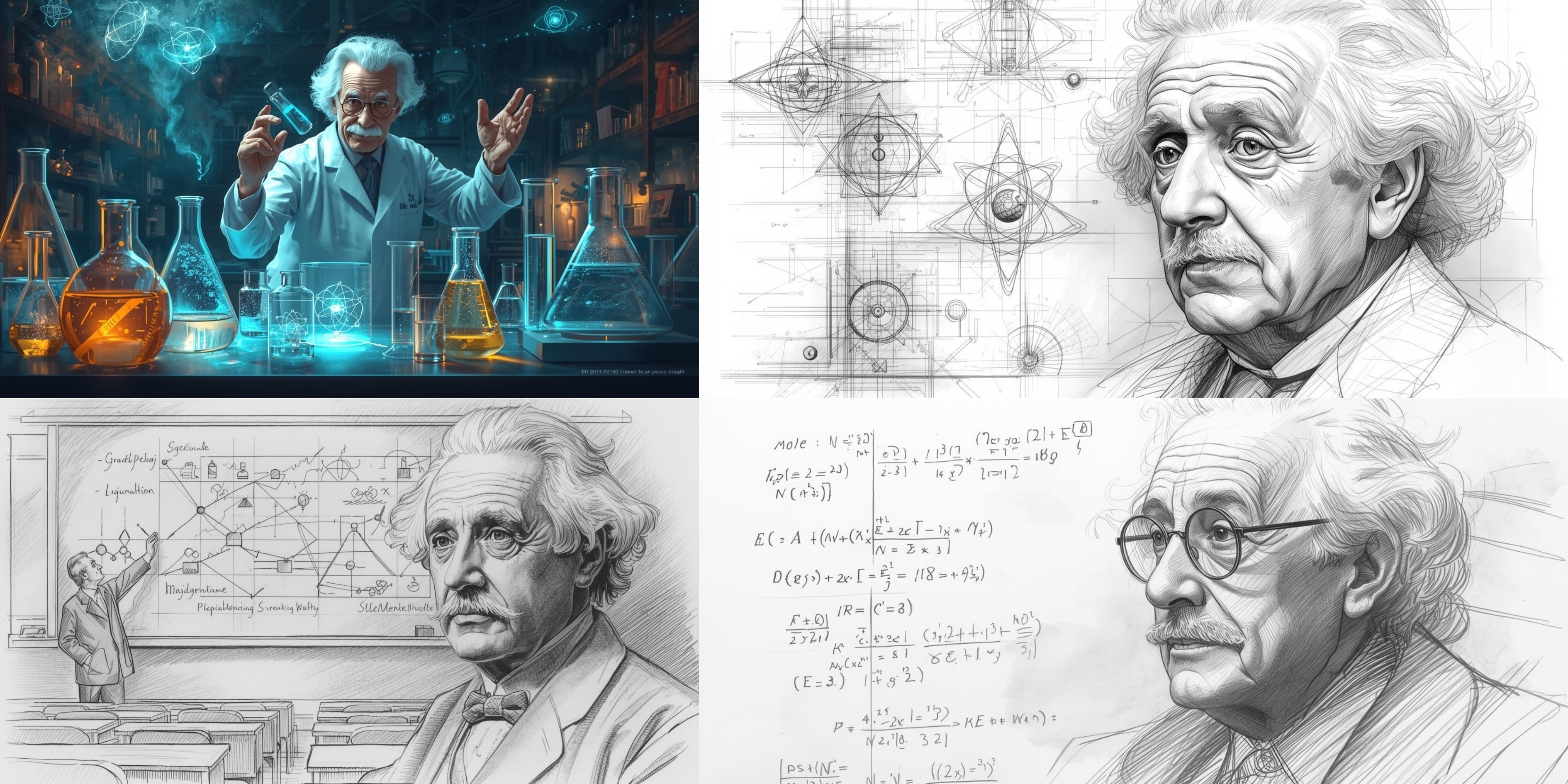
Albert Einstein’s Philanthropy & Impact
Aside from being a scientist, Einstein was an activist.
He very vocally opposed war and lent his support to many different peace efforts. In particular, he advocated for racial equality and equality in general while he was living in America.
His contribution extended beyond his scientific contributions. Very many students, scientists, and great thinkers continue to draw inspiration from him today, decades after his death.
Lessons / Principles
Powerful lessons about life can be learned from reading a biography of Albert Einstein:
1. Always keep your curiosity alive
2. Always ask questions about the world
3. Look to think differently from everyone else
4. Concentrate on ideas instead of accomplishments
These are all characteristics of Albert Einstein that help make him unique.
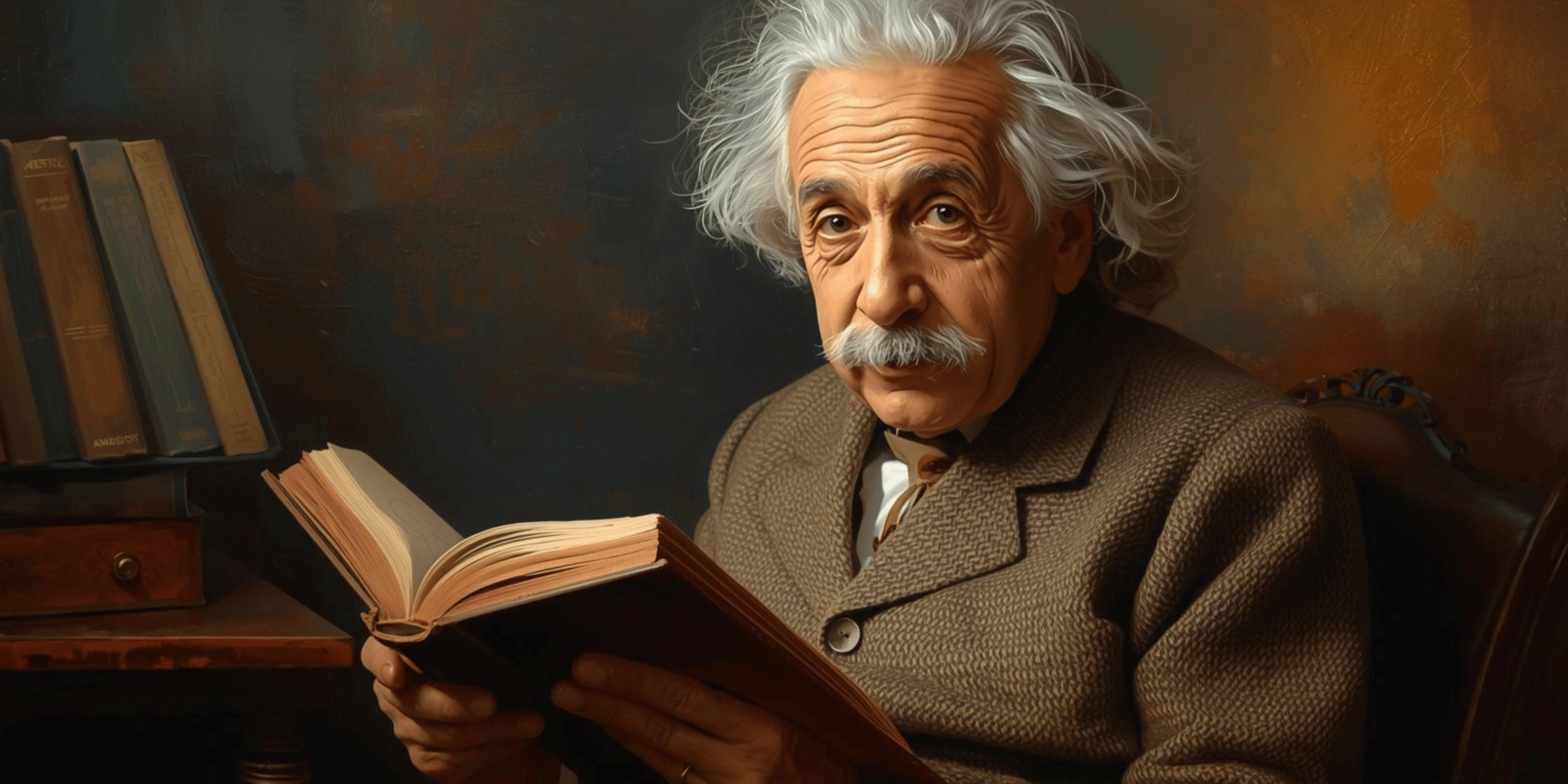
Albert Einstein’s Interesting Facts (5 Only)
1. Einstein did not speak fluently until he was around 4 years old
2. He loved playing the violin in his free time
3. He was offered the presidency of Israel but refused
4. His brain was preserved for scientific study after his death
5. He disliked traditional schooling and preferred self-learning
FAQs
Q1: What is Albert Einstein famous for?
He is famous for the Theory of Relativity and the equation E = mc².
Q2: Did Albert Einstein win a Nobel Prize?
Yes, he won the Nobel Prize in Physics in 1921.
Q3: Where did Einstein study?
He studied at ETH Zurich in Switzerland.
Q4: Why is Einstein considered a genius?
His ideas completely changed our understanding of the universe.
Conclusion
1. The life story of Albert Einstein serves as a powerful symbol of greatness being derived from insatiable curiosity, persistence, and individualism.
2. From being a quiet young boy to becoming a scientist who changed the course of history, Einstein’s life proves that you do not have to conform to do great things in your life.
3. Einstein will forever inspire future generations through his legacy.
Explore More Inspiring Biographies
Greta Thunberg – Young activist leading a global climate movement
Elon Musk – Visionary entrepreneur shaping the future with Tesla and SpaceX